
What is Yin Yoga and Why Do I Need It?
- 5 days ago
- 3 min read
What is Yin Yoga?
Yin Yoga is a slow, meditative style of yoga that targets deep connective tissues (fascia, ligaments, and joints) through passive postures, which are held for 3-7 minutes. The practitioner finds their mindful edge in each posture and then supports the body with the use of yoga props, such as blocks, bolsters, and blankets, in order to allow the muscles to completely relax. By relaxing muscles, the fascia and connective tissues are gently stressed and remodeled to promote joint health and improve range of motion and flexibility.
Why practice Yin yoga?
As we age, our bones and cartilage begin to deteriorate, we lose mobility in our joints and our fascia dries out and tightens. A consistent Yin yoga practice helps to regain mobility and ease chronic pain and inflammation in the body by gently remodeling the fascia.
Yin Yoga is an excellent counter to the more physically demanding (Yang) yoga disciplines. The practice perfectly balances an intense yoga or other physically demanding activity to help you avoid injury and retain healthy range of motion around your joints.
Key Benefits of a Regular Yin Yoga Practice:
· Targets connective tissues and fascia throughout the body
· Reduces stress and relieves tension
· Increases circulation
· Balances internal organs and improves flow of prana
· Balances Yang yoga practice
· Improves flexibility
· Encourages mindfulness and meditation
How it works:
· In a Yin practice, postures are held for 3-7 minutes in order to affect the deeper connective tissues, which are denser and less pliant than muscle. This process gently remodels fascia in the body and helps coax chi and blood through tissues, helping to reduce pain and inflammation.
· Yin postures allow muscles to soften and relax which in turn allows us to gently stress the joints and connective tissue, restoring vitality.
· It is though the connective tissue (fascia, joints, bones, & ligaments)
that chi (energy) is moved along the meridian pathways throughout the body.
· Yin yoga postures pull and press these connective tissues, stimulating the flow of blood, oxygen, and nutrients along with chi throughout the body.
· The more we work our fascial system and deep tissues, the less dense and tight our bodies become as we age.
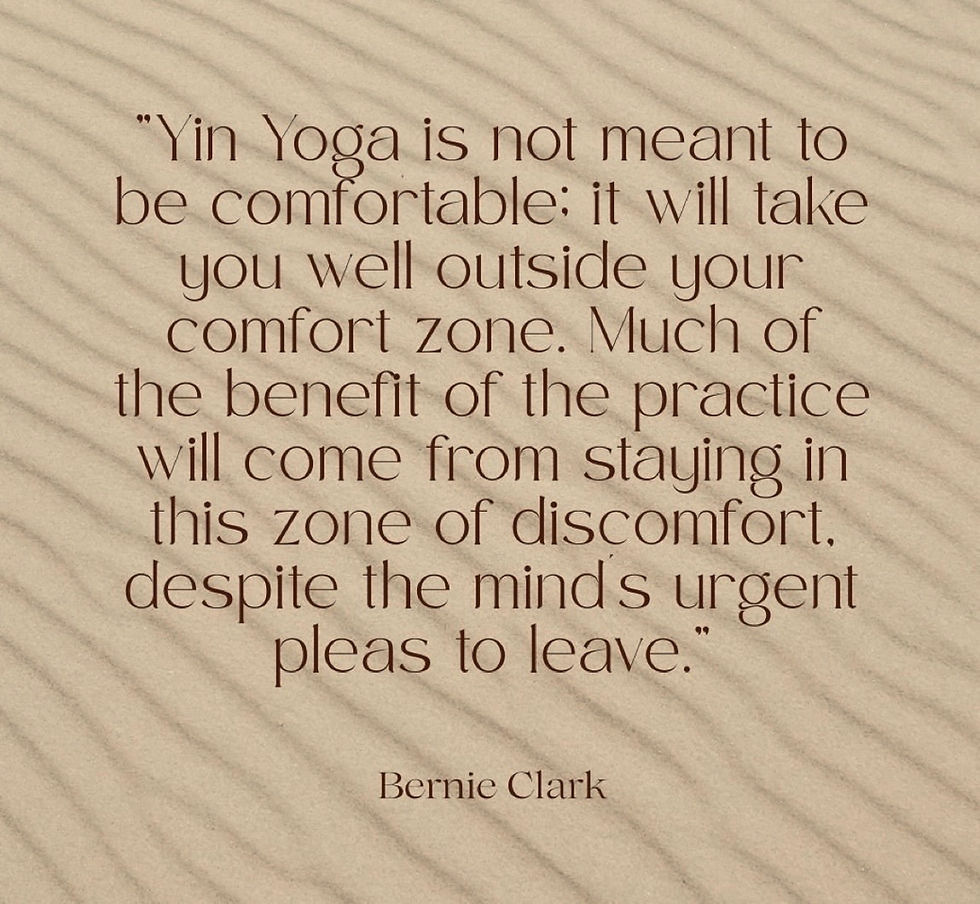
· Lengthening extremely tight tissues can sometimes be a very uncomfortable practice, but using this time to focus on the breath is a large part of yin yoga.
· When we experience pain or discomfort, our bodies naturally become tense, and we begin to use our fight or flight response (sympathetic nervous system); Yin yoga teaches us to reroute the mind and slow the heart rate when we experience stress or discomfort.
· As you focus on the breath, your mind will remain relaxed throughout the practice, and you will begin to release tension and more easily stretch the tissues.
What will I Experience During Yin Yoga?
During a Yin Yoga practice, it is common to experience different emotions such as anxiety, fear, happiness, sadness, or boredom. Humans are emotional beings, and much of the emotion from our experiences is stored within the body. Our emotions are physically stored in our bodies and can become pain or blockages (chi stagnation) which can materialize as tension, tightness, inflammation, and pain. Our joints are one of the primary areas of chi stagnation. It is important that we release stored emotions in order to promote flow of chi and remain pain free, healthy and balanced in our physical bodies.
You can expect slow, deep stretches and meditation in a Yin yoga practice which will bring awareness to these stored emotions and in turn assist in balancing and strengthening the body, mind, and spirit.
I look forward to sharing the benefits of yin yoga with you in my classes. As always, feel free to reach out to me if you would like more information about how a yin yoga practice can help you feel better, move better, and live better in your body.
Namaste,
Robbie


Comments